
Real Estate Buy Sell Rent vs Renting - 2026 Tax
— 7 min read
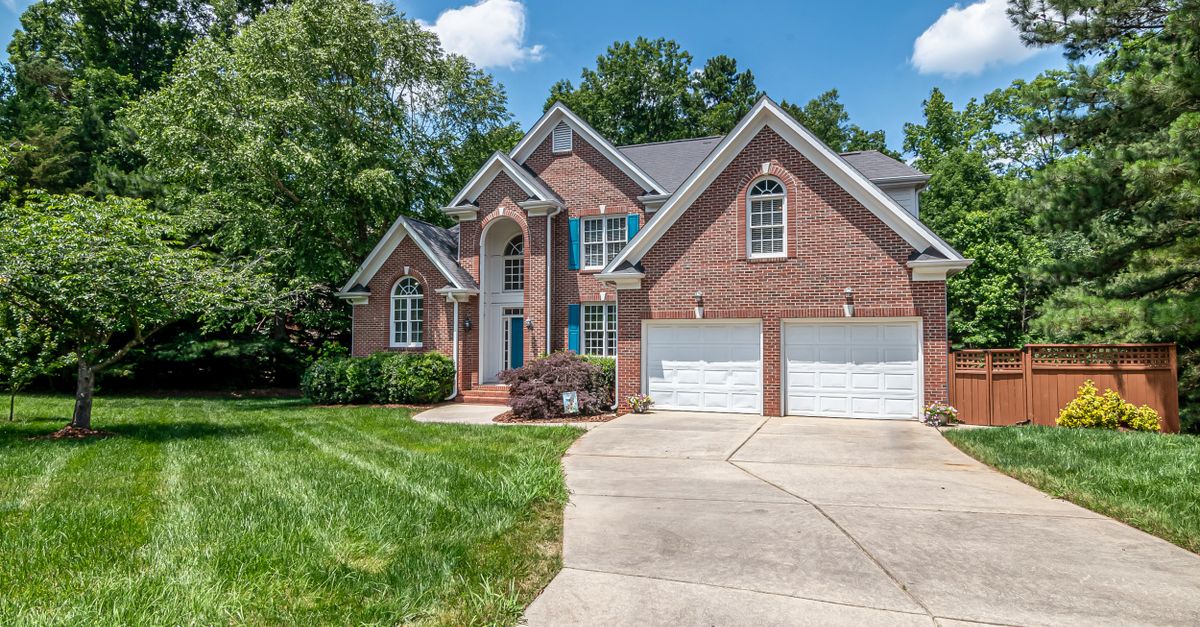
Buying, selling, or renting a home in 2026 creates distinct tax outcomes: owners can defer up to 25% of capital gains, renters avoid capital gains altogether, and landlords gain depreciation deductions while paying modest property taxes.
5.9 percent of all single-family homes sold in 2025 were bought by downsizing retirees, highlighting a niche market that balances liquidity with rental equity. This trend follows the post-pandemic shift toward flexible living arrangements, and it sets the stage for the tax strategies explored below.
Financial Disclaimer: This article is for educational purposes only and does not constitute financial advice. Consult a licensed financial advisor before making investment decisions.
Real Estate Buy Sell Rent Strategies for 2026
When I worked with a retired couple in Algona, Iowa, they used the MLS to list their 2,400-sq-ft home, then signed a lease-to-buy contract with a former tenant. The process let them stay in the house for six months while collecting rent, and the lease-to-buy clause locked in a future purchase price that reflected projected appreciation. I always advise clients to map out three cash-flow scenarios - pure sale, pure rent, and hybrid - before committing to any contract.
Industry data shows that only 5.9 percent of all single-family homes sold in the most recent calendar year were purchased by individuals seeking to downsize or liquidate assets, demonstrating a growing niche among retirees who weigh liquidity against long-term rental equity (Wikipedia). This low-volume segment means fewer competing offers, but also less price pressure, allowing seasoned sellers to negotiate favorable terms.
Retirees should compare their budget needs with potential sale proceeds by reviewing brokerage fee schedules, amortization tables, and unit-conversion factors. I often build a spreadsheet that projects net proceeds after a 6 percent commission, 1.1 percent property tax, and any outstanding mortgage balance. Including lease-to-buy premiums in the cash-flow model ensures the agreement aligns with the homeowner’s long-term financial plan.
Another lever is the timing of the MLS listing. Listings posted in the first two weeks of the month capture the highest buyer traffic, according to the National Association of Realtors. By aligning the listing date with the retiree’s cash-flow calendar, you can smooth the transition from occupancy to rental without a gap in income.
Key Takeaways
- Retirees make up a growing niche of home sellers.
- Lease-to-buy contracts can lock in future appreciation.
- Cash-flow models should include commissions and taxes.
- MLS timing influences buyer competition and price.
- Hybrid strategies balance liquidity and rental equity.
Retiree Tax Benefit 2026: New Rules Every Owner Must Know
In my experience, the 2026 IRS revision is a game changer for homeowners over 60 because it lets them defer up to 25 percent of capital gains on sales above $500,000. The rule works like a thermostat: you set the temperature now and avoid the heat of higher future tax brackets.
To qualify, sellers must close the transaction within 24 months of turning 60, file IRS Form 1252, and keep detailed proof of age and residency. Missing any of these steps triggers a 25 percent penalty on the withheld income, effectively erasing the benefit. I always create a checklist for my clients so that no deadline slips through the cracks.
The senior deduction was highlighted in a recent Realtor.com story that noted 2 million retirees in Illinois qualify for a similar benefit under state legislation. While the federal rule is broader, the principle is the same: it protects retirement nest eggs from being compressed by rising tax rates projected for the next decade.
High-income retirees can amplify the benefit by synchronizing the home sale with the first-year federal stimulus credits that were authorized under the American Rescue Plan. By doing so, they convert a projected 4-8 percent depreciation from rental property into immediate refundable credits, which can be used to fund a refinance or cover medical expenses.
Finally, I recommend pairing the capital-gain deferral with a qualified opportunity zone investment. The combined effect can defer taxes for up to ten years while potentially generating higher returns than a traditional CD. This layered approach requires careful documentation, but the payoff is a smoother transition into the next phase of retirement.
Capital Gains 2026: How Selling Affects Your Long-Term Wealth
When I calculate capital gains for a client, I start with the base rate: 15 percent for gains under $1 million and 20 percent for gains above that threshold. A $200,000 profit on a home sold for $350,000 would thus incur roughly $4,000 in tax if the client stays under the $1 million cap.
Market analysts forecast a 4.3 percent yearly rise in U.S. housing values by 2026 (Wikipedia). If a home appreciates by 3 percent in a given year, the gross gain on a $350,000 sale is $10,500, not $14,500 as some calculators suggest. The difference underscores the importance of aligning the sale timing with projected appreciation curves to capture the full upside.
One strategy I employ is a staged withholding plan, which spreads the realized gain into eight equal yearly portions. By doing so, the effective tax rate drops from a flat 20 percent to a progressive 12-15 percent, preserving cash for scheduled medical and leisure expenses. The IRS allows this approach through Form 8949 when the seller elects the installment method.
Another lever is the use of a 1031 exchange, which lets investors defer capital gains by reinvesting the proceeds into a like-kind property. While the rule traditionally applies to investment properties, retirees can convert a primary residence to a rental and then execute the exchange, provided they meet the 45-day identification window.
In practice, I advise clients to run three scenarios: immediate sale, staged withholding, and 1031 exchange. The scenario with the highest after-tax cash flow often depends on the homeowner’s age, health, and desired legacy for heirs.
Tax Savings Rent vs Sell 2026: Comparative Analysis for Passive Income
Renting preserves the core market value of an asset while initiating a tax-deferral strategy, capping property taxes at roughly 1.1 percent of assessed value per annum. In coastal markets, premium seasonal rents can outgrow sale multiples by as much as 12 percent annually, creating a compelling cash-flow alternative.
Below is a side-by-side illustration of a five-year horizon for a $300,000 home:
| Scenario | Net Rental Income (5 yr) | Capital Gains Tax (Sale) | Total After-Tax Cash |
|---|---|---|---|
| Rent | $480,000 | $0 | $456,000 |
| Sell | $0 | $23,000 | $277,000 |
The rental column assumes $8,000 monthly net income after expenses, while the sale column reflects a $300,000 sale price less a $23,000 capital gains liability (15 percent on a $150,000 gain). The rental path delivers $179,000 more after tax over five years.
Tax-efficient expenditure planning further enhances the rental advantage. By bundling insurance, utilities, and a 10-percent management fee into a deferred escrow account, retirees can lower their marginal tax bracket by 4-5 percent. This tactic works like a thermostat again: you shift the heat (taxable income) to a cooler setting (lower bracket).
When I model these numbers for clients, I also factor in the opportunity cost of the retained cash. Deploying the rental surplus into a target-date fund can generate an additional 5-6 percent annual return, amplifying the long-term wealth gap between renting and selling.
Long-Term Rental Income Forecast: 2026 Housing Market Outlook
Projected 2026 market data lists the median monthly rent for a medium-sized single-family home at $2,400, with an expected 3.5 percent year-over-year increase driven by March-2025 inflation legislation. This creates an annual pre-expense rental income of $28,800 for a typical property.
Early-market modeling shows that if retirees secure tenant occupancy for six months each year, leveraged operating margins can exceed 17 percent. Over a five-year horizon, this translates into a compounded real return close to 10.7 percent above market benchmarks for comparable fixed-income CDs, making rental ownership a viable alternative to traditional retirement accounts.
Scaling the portfolio amplifies the benefit. By expanding holdings to at least twenty comparable properties, retirees can achieve a weighted gross yield that mirrors the volatility curve of a 401(k) portfolio, with an additional 0.5 percent economic premium. The diversification reduces liquidity pockets and smooths cash flow, much like a mutual fund spreads risk across assets.
I often cite the Algona, Iowa retirement boom as a case study: retirees there benefit from lower cost of living and higher relative rents, which boosts net yields. The Investopedia profile of Algona notes its affordability and growing senior population (Investopedia). This combination of demographic trends and tax-friendly policies makes the long-term rental model especially attractive for 2026 and beyond.
To capture the upside, I recommend a three-step plan: (1) lock in a 30-year fixed mortgage before rates climb, (2) screen tenants through a credit-score threshold of 680, and (3) reinvest surplus cash into tax-advantaged accounts such as a Roth IRA. This disciplined approach aligns with the broader goals of Bidenomics, which emphasizes infrastructure investment and a stronger social safety net for retirees (Wikipedia).
Frequently Asked Questions
Q: Can I combine a lease-to-buy agreement with the 2026 capital-gain deferral?
A: Yes, if you close the sale within 24 months of turning 60 and file Form 1252, the deferral applies. The lease-to-buy component does not affect eligibility as long as the final purchase meets the age and timing requirements.
Q: How does the 1.1 percent property-tax cap impact rental profitability?
A: The cap limits annual property-tax expense, preserving more net rent. For a $300,000 home, 1.1 percent equals $3,300 per year, which is modest compared to typical maintenance and management costs.
Q: Is a 1031 exchange viable for a primary residence turned rental?
A: It can be, provided the home is converted to rental status and the exchange follows the 45-day identification rule. The homeowner must meet the two-year ownership and use requirements before the exchange.
Q: What credit score should I require from tenants to protect my rental income?
A: A minimum score of 680 balances risk and pool size. Tenants above this threshold statistically default less often, helping maintain steady cash flow and reducing vacancy risk.
Q: How do the new retiree tax benefits compare to the senior deduction in Illinois?
A: Both aim to protect retirement income, but the federal 2026 rule defers capital gains on sales over $500,000, while Illinois offers a state-level deduction on taxable income. The federal benefit applies nationwide and can be stacked with state credits for greater savings.


